April 15, 2026
CSS: A Year in Review — FY 2025–26
The Centre for Shaiva Studies (CSS), a Pondicherry-based research institute of Śaivism, presents its work from 2025–26: two new publications, ongoing classes on primary texts, invited lectures, and a new temple documentation project.
Publications
Two books were published by CSS during the year: a critical edition of approximately the first 1000 verses of the Kāmikāgama, and an English translation of the Vijñānabhairava Tantra with classical commentaries.
1. Vijñānabhairava Tantra — March 2026
The Vijñānabhairava Tantra is a foundational text of the Kashmir Śaiva tradition, presenting 112 contemplative techniques for the realisation of pure awareness. Composed as a dialogue between Śiva and Devī, the text covers practices ranging from breath and bodily awareness to the contemplation of sound, emotion, perception, and emptiness, each oriented towards the recognition of one's identity with Bhairava.
The CSS edition presents the translated root text together with the classical Sanskrit commentaries of Ānandabhaṭṭa and Śivopādhyāya, rendered into English for the first time, alongside an extended exposition by the late Mark Dyczkowski (1951–2025), the scholar of Kashmir Śaivism and disciple of Swami Lakshmanjoo. The volume, edited by Manish Maheshwari, is published posthumously. The book will be formally inaugurated at CSS on May 22nd, 2026, and it will be available for purchase from July 2025 onwards.
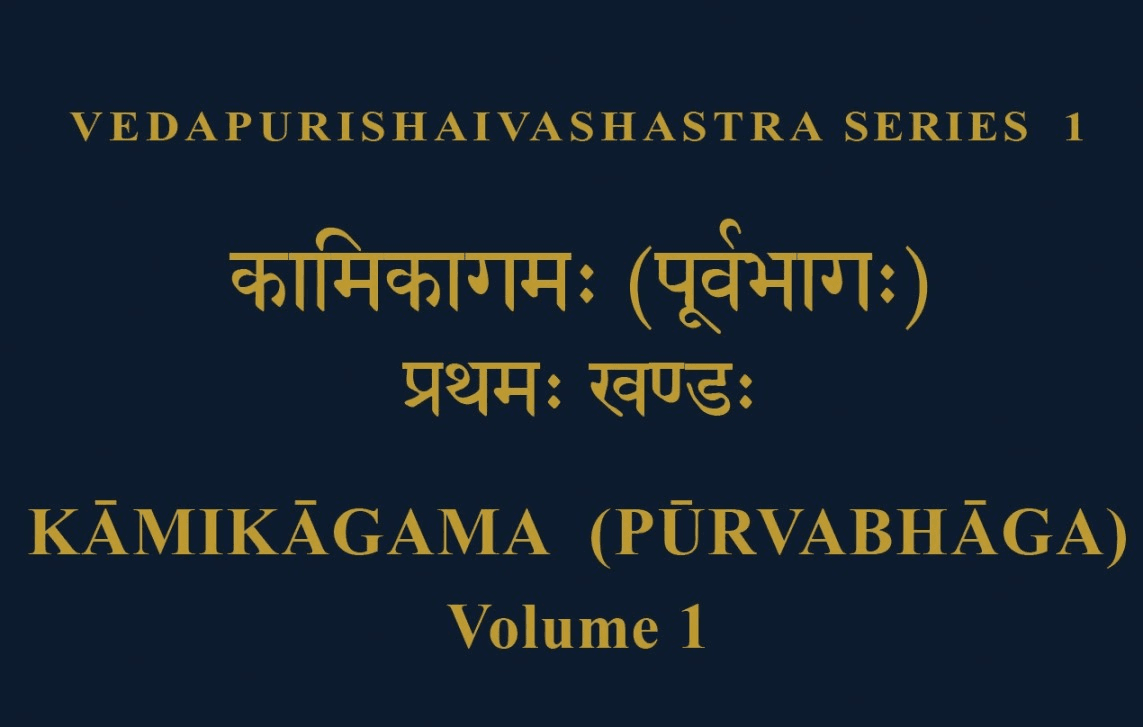
2. Kāmikāgama (Pūrvabhāga), Volume 1 — December 2025
The Kāmikāgama is the first of the twenty-eight Mūlāgamas of the Śaivasiddhānta and one of the most consulted Āgamas in the Tamil Śaiva tradition, particularly in matters relating to temple ritual. No critical edition of the text has existed in modern times; the only available printed text is a Grantha-script edition published over a century ago, based on unidentified manuscripts, later reprinted in Devanāgarī.
Volume 1 of the present critical edition, prepared at CSS under the editorship of Dr. T. Ganesan, contains the first five paṭalas of the Pūrvabhāga, comprising approximately 1,000 anuṣṭubh verses. The text was established by collating sixteen manuscripts selected from over thirty-five available, drawn principally from the holdings of the French Institute of Pondicherry. Variant readings are recorded in the apparatus, and the established text is accompanied by a detailed introduction in English and summaries of each paṭala in both English and Tamil. This is the first publication of the Vedapuri-Shaivashastra Publication Series, and the opening volume of an intended multi-volume edition of the entire Kāmikāgama. Editorial work on Volume 2 is already underway.
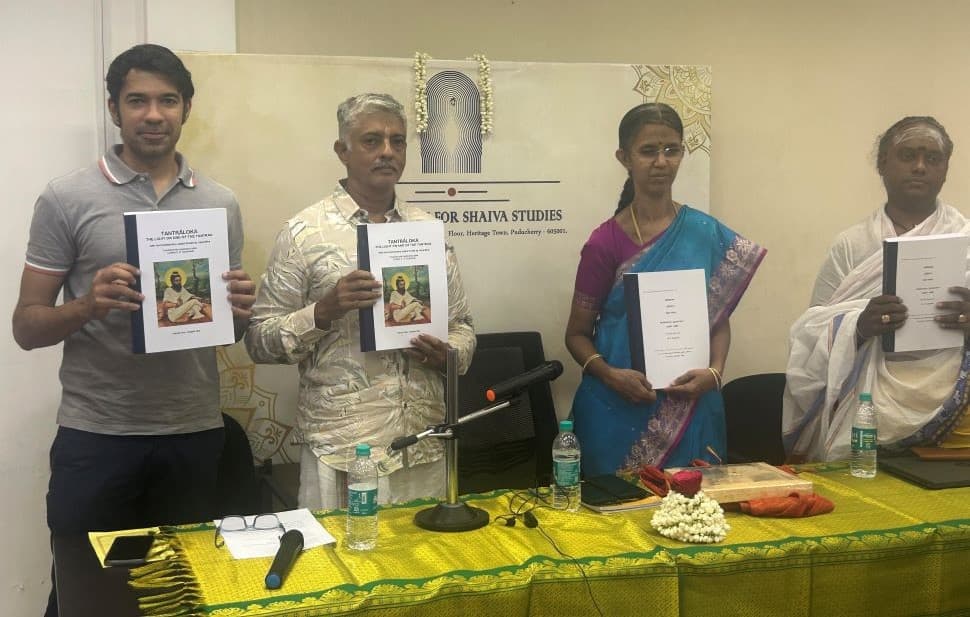
The book was formally inaugurated at a launch event hosted by CSS, at which Sri Somashekhara Śivācārya delivered the inaugural address, speaking on the place of the Kāmikāgama within the Mūlāgama corpus and its centrality to the ritual life of the Tamil Śaiva temple tradition.
Pedagogical Activities
Weekly Online Classes
CSS has continued its programme of weekly online classes on primary Śaiva and Vedāntic texts, conducted by Dr. T. Ganesan. Two text courses were completed during the year, and two remain ongoing.
Texts completed:
- Śvetāśvataropaniṣad
- Kenopaniṣad
Texts ongoing:
- Mṛgendrāgama (Vidyāpāda), with the commentary of Nārāyaṇakaṇṭha
- Tattvaprakāśa of Bhojadeva, based on the commentary of Aghoraśivācārya, in English and Tamil
Academic Engagements and Lectures
Invited Lectures by Dr. T. Ganesan
In March 2026, Dr. Ganesan delivered two invited lectures, the first under the auspices of the Tantra Foundation, New Delhi, and the second at the Department of History, Pondicherry University:
- Śaiva Āgamas and their Contents: A Brief Survey
- The Concept of Bindu in Śaivasiddhānta
Monthly Lecture Series — The Eleventh Tirumuṟai
To mark the fourth anniversary of CSS, the Centre inaugurated a lecture series on the eleventh book of the Tirumuṟai, the great Tamil Śaiva canonical corpus. The eleventh Tirumuṟai is a collection of forty texts of varying length, containing devotional hymns sung in Tamil to Śiva by twelve Śaiva bhaktas, several of whom were royal figures of the Pallava and Chera dynasties, living between roughly the fourth–fifth and the eleventh centuries.
The series gave particular attention to the two great compositions of Kāraikkāl Ammaiyār — Tiruvirattaimaṇimālai and Aṛputattiruvantāti — and to the Tirukkōyil Tiruveṇpā of Aiyaṭikaḷ Kāṭavaṟkōn Nāyaṉār.
Lectures delivered as part of the series:
Part 1 — 6 May 2025 (on the occasion of CSS 4th Anniversary)
Part 2 — June 2025
Part 3 — August 2025
Looking Ahead
The Centre's priorities for the coming year are continuous with the work already in motion. Volume 2 of the Kāmikāgama is in preparation. The weekly classes on the Mṛgendrāgama and the Tattvaprakāśa will continue. Further works by Dr. Mark Dyczkowski are under consideration for publication, building on the model established by the Vijñānabhairava volume.
A new initiative also takes shape this year: a documentation project covering approximately twenty Śaiva temples in and around Pondicherry. Conceived as an effort to record the architectural, iconographic, epigraphic, Āgamic, and living-tradition dimensions of these temples in an integrated manner, the project is being led in the field by Dr. Deepa Reddy (University of Houston–Clear Lake) and Arunaditya Das, under the overall supervision of Dr. T. Ganesan. The work spans historic major temples, modern neighbourhood temples, and folk and village shrines, and is intended both as a scholarly record and as the foundation for further study of the temple as a living institution.